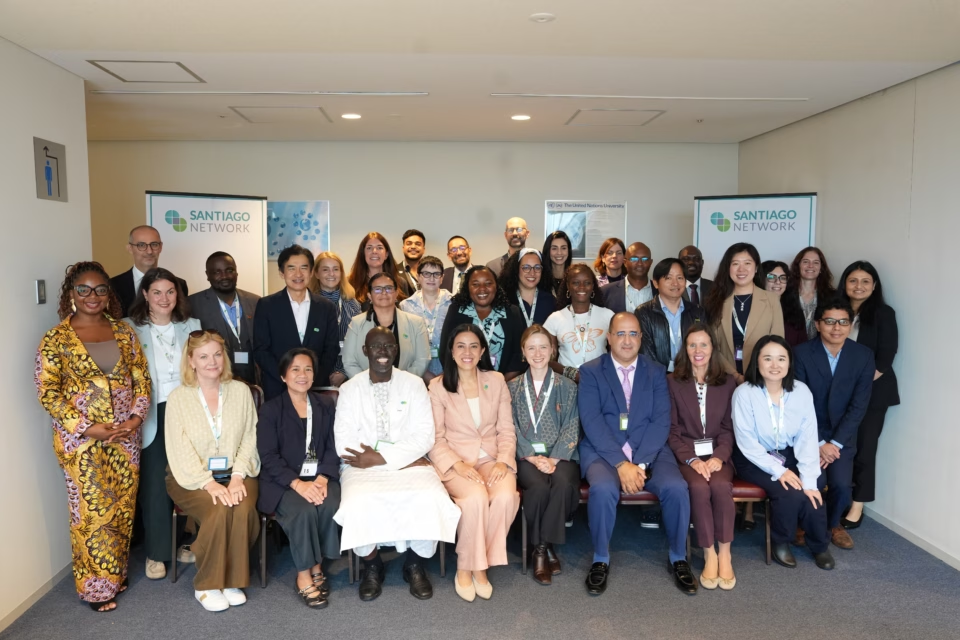
Seventh meeting of the Santiago Network Advisory Board highlights expanded technical assistance implementation
The seventh meeting of the Santiago Network Advisory Board (SNAB7) concluded in Tokyo, Japan, after three days of discussions focused on accelerating support for developing countries facing climate-induced loss and damage. Held from 29 September to 1 October 2026, the meeting was hosted by the United Nations University at the invitation of the Government of Japan, through the Ministry of the Environment. In his opening remarks, Mr. Takeshi Sekiya, Vice-Minister for Global Environmental Affairs at the Ministry of the Environment of Japan, stressed the importance of the Santiago Network's role in catalysing technical assistance for averting, minimizing and addressing climate-induced loss and damage, and highlighted Japan's commitment to strengthening the resilience of vulnerable communities. The meeting marked the first time that the Advisory Board convened outside the Secretariat's headquarters.
The Advisory Board welcomed the progress made by the Santiago Network since its sixth meeting, notably the growth of the technical assistance pipeline from 20 requests at SNAB6 to more than 40 by SNAB7, with 17 active requests, four under implementation and one completed. The Santiago Network has expanded and diversified its membership, with more than 420 Members as of 29 September 2026, including organizations focused on women and gender, children and youth, Indigenous Peoples, as well as local and community-based actors across sectors.
Two key operational documents were approved by the Advisory Board, namely the revised guidelines for catalysing technical assistance and membership guidelines. These revisions aim to strengthen the delivery of technical assistance, enhance outreach and engagement efforts in coordination with National Liaisons to the Santiago Network, promote regional balance, and increase support to least developed countries (LDCs) and small island developing States (SIDS) in the development of technical assistance requests.
Focusing on accountability, the Advisory Board took note of the monitoring, evaluation, accountability and learning (MEAL) framework presented by the Secretariat and provided guidance for its implementation, in line with the Advisory Board-approved Santiago Network Results Framework. This will support evidence-based decision-making and inform future implementation through lessons learned. In addition, the Advisory Board took note of the zero draft of the Santiago Network Gender and Inclusion Action Plan (GIAP), providing feedback to inform a participatory stakeholder consultation process for its further development, with a view to its consideration and adoption at the eighth meeting of the Advisory Board.
The Advisory Board adopted the terms of reference for the regular report on loss and damage associated with the adverse effects of climate change, an important step towards strengthening knowledge generation and improving understanding of evolving loss and damage challenges globally.
The Tokyo SNAB meeting underscored the Santiago Network's evolution into a growing operational mechanism within the broader loss and damage landscape. With increased membership, strengthened institutional capacity and an expanding pipeline of technical assistance, the Network continues to scale up technical assistance implementation, enhancing efficiency and delivering tangible support to developing countries particularly vulnerable to the adverse effects of climate change.
Explore the report of the seventh Advisory Board meeting
Read the statement from Co-Chairs on the seventh Advisory Board meeting