Communities on the frontlines of climate change are already living with loss and damage resulting from its impacts. From loss of life, destroyed homes and livelihoods to impacts on health, culture, and ecosystems, the effects of climate change are both immediate and long‑lasting. Yet too often, these communities lack access to the funding and technical support they need to respond effectively.
To help address this gap, the Santiago Network is strengthening its support for community‑driven technical assistance. On 23 March 2026, the Network launched a simplified funding opportunity designed to make support faster, more accessible, and more responsive to real needs on the ground. This funding window aligns with the Network’s vision of shaping a future in which communities most affected by climate change can shape and drive inclusive action on loss and damage, guided by their priorities, realities, and knowledge.
The Santiago Network was established to connect developing countries and communities with timely, tailored, and demand‑driven technical assistance to help avert, minimize, and address loss and damage from the impacts of climate change, including at the local level.
At the heart of this approach is a simple principle: communities are not just beneficiaries of support, but also essential knowledge holders, leaders, and drivers of action. Their lived experience, practices, and priorities are central to building capacities and designing responses that are effective, equitable, and sustainable.
Through this community‑centred lens, technical assistance can support a wide range of locally driven activities, such as loss and damage assessments (including for non-economic losses), early warning and preparedness information, relocation planning for high‑risk areas, training and capacity building, and the protection of cultural heritage and traditional knowledge, and many more.
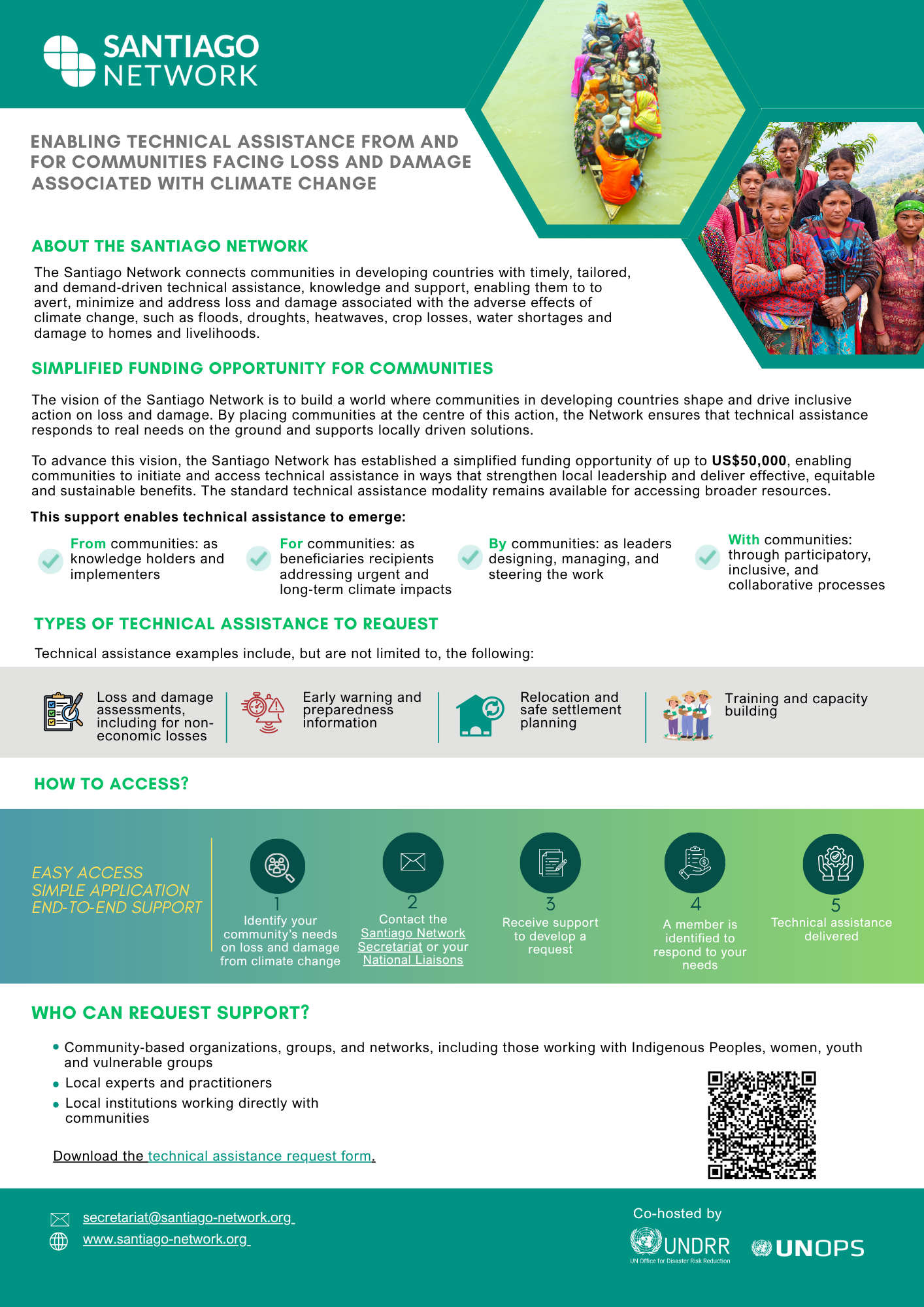
To advance its vision, the Santiago Network has introduced a simplified funding opportunity to enable communities to initiate and access technical assistance for loss and damage. The funding window allows for up to US$50,000 per request and is designed to enable quick and accessible support through simpler procedures, streamlined requirements, and a strong focus on action and results.
By enabling communities to initiate and shape technical assistance through a simplified process, the Santiago Network helps strengthen local leadership, improve access to expertise and resources, and foster solutions grounded in local realities. Communities seeking support should: (i) identify community needs related to climate loss and damage; (ii) contact the Santiago Network Secretariat or National Liaisons; and (iii) receive support from the Santiago Network Secretariat to develop a request. Following review, the Santiago Network will identify a Member to deliver the required technical assistance. Throughout this process, the Santiago Network Secretariat provides end‑to‑end support, including guidance on procedures, assistance with documentation, and verification to ensure requests are properly submitted.
Requests for this community‑driven technical assistance may come from (i) community‑based organizations, groups, and networks, including those working with Indigenous Peoples, women, youth, and other vulnerable groups; (ii) local experts and practitioners; (iii) local institutions working directly with communities; and (iv) entities seeking to collaborate on community‑led approaches.
For communities facing loss and damage from the adverse effects of climate change, this approach offers more than support; it offers partnership and a pathway to action rooted in local leadership.
Consult the factsheet for more information.
Use the simplified template for your request.